
.png)


Growth, Grid Transformation, Electrification, AI, and Sustainable Energy Systems
The Energy & Power industry is entering a new innovation opportunity cycle. This shift is not defined only by decarbonisation targets or infrastructure upgrades. It is being driven by a deeper restructuring of where value is created, who controls customer relationships, and which capabilities determine competitive advantage.
For business leaders, the central question is no longer just how to operate existing assets more efficiently. It is where to place the next wave of portfolio bets as electrification, distributed energy, digital energy systems, infrastructure modernisation, and mobility convergence reshape the market.
That distinction matters. In this industry, some of the most important opportunities are now emerging through product, service, platform, and portfolio innovation rather than operational optimisation alone. Digital operations, asset reliability, and process improvement still matter. They support scale, resilience, cost position, and capital productivity. But the strongest commercial upside is increasingly tied to new energy products, new infrastructure models, new service layers, and new ecosystem positions.

Electricity demand is rising as transport, industry, and heat electrify

Renewable deployment is reshaping generation economics and system design

Grid constraints are becoming one of the biggest barriers to growth

Digital capabilities are moving from efficiency tools to strategic differentiators

Sustainability pressure is changing investment logic, technology choices, and partnership models

Adjacent markets such as mobility, charging, flexibility services, and industrial decarbonisation are opening new revenue pools
.jpg)
Description
Integration of solar, wind, and storage into larger hybrid systems with stronger system value and more stable output profiles.
Strategic relevance
Critical to long-term portfolio transition and to building more competitive generation positions in low-carbon power markets.
Commercial relevance
Creates scalable revenue potential through generation, capacity participation, and improved asset utilisation.
Time horizon
2025 to 2035
Description
Replacement of fossil-based heating and industrial processes with electric systems.
Strategic relevance
Expands electricity demand structurally and links power strategy more closely to industrial transformation.
Commercial relevance
Creates demand growth and opens solution-based opportunities tied to industrial customers and large energy users.
Time horizon
2026 to 2035
Description
Grid-scale and distributed storage solutions paired with market mechanisms for balancing, arbitrage, and flexibility services.
Strategic relevance
One of the most important enablers of renewable scale, system resilience, and grid flexibility.
Commercial relevance
High-growth market with multiple monetisation routes across capacity, ancillary services, and energy management.
Time horizon
2025 to 2032
Description
Green hydrogen, e-fuels, ammonia, and related pathways for industrial decarbonisation and future energy trade.
Strategic relevance
Important for long-term positioning in hard-to-abate sectors and future cross-border energy value chains.
Commercial relevance
Large upside potential, but commercial timing varies by geography, policy support, and industrial demand.
Time horizon
2028 to 2040
Description
Decentralized energy models that combine rooftop solar, behind-the-meter assets, microgrids, and customer participation.
Strategic relevance
Moves companies closer to end users and toward platform roles rather than pure asset ownership.
Commercial relevance
Supports recurring service revenues, aggregation economics, and stronger customer lifetime value.
Time horizon
2026 to 2035
Description
Infrastructure and energy service models built around subscriptions, performance contracts, or long-term managed-service structures.
Strategic relevance
Supports a shift from capital-heavy ownership models toward customer-centric service positions.
Commercial relevance
Builds recurring revenue streams and stronger customer relationships in commercial and industrial segments.
Time horizon
2026 to 2035
Description
Digital and operational solutions that reduce bottlenecks and accelerate connection processes.
Strategic relevance
Strategically important because grid constraints are now delaying renewable and infrastructure growth in many markets.
Commercial relevance
Delivers direct value through improved capacity utilisation, faster project realisation, and reduced curtailment.
Time horizon
2025 to 2030
Description
Platforms that manage and monetize load shifting, distributed resources, and customer-side system participation.
Strategic relevance
Shifts part of system value creation to the demand side and supports more flexible market design.
Commercial relevance
Creates service revenues and improves economics of grid balancing without equivalent physical build-out.
Time horizon
2025 to 2030
Description
Grid automation, digital substations, sensor networks, and intelligent control systems.
Strategic relevance
Foundational to enabling electrification, distributed generation, and higher system complexity.
Commercial relevance
Unlocks infrastructure returns, reduces losses, and creates new service and optimisation revenue layers.
Time horizon
2025 to 2032
Description
Platforms that integrate, structure, and monetize operational and market data across energy ecosystems.
Strategic relevance
Important for ecosystem positioning and for building digital capabilities that scale across multiple business lines.
Commercial relevance
Creates new digital revenue opportunities and strengthens partnership and platform plays.
Time horizon
2026 to 2035
Description
Self-optimizing plants, networks, and distributed systems with increasing automation in control and decision-making.
Strategic relevance
Represents a future operating model shift in increasingly complex and distributed energy environments.
Commercial relevance
Long-term potential for lower operating cost, higher resilience, and better system responsiveness.
Time horizon
2028 to 2038
Description
Predictive tools for weather, generation, pricing, demand, and market participation.
Strategic relevance
Strengthens decision quality in increasingly volatile and data-rich energy markets.
Commercial relevance
Improves trading margins, portfolio optimisation, and market responsiveness.
Time horizon
2025 to 2030
Description
Virtual models of plants, grids, and infrastructure used for optimisation, simulation, and scenario planning.
Strategic relevance
Helps companies manage complex assets more intelligently and improve long-term planning.
Commercial relevance
Supports better asset uptime, stronger maintenance economics, and higher return on invested capital.
Time horizon
2025 to 2032
Description
Standardized and prefabricated energy system components that simplify deployment and scaling.
Strategic relevance
Helps reduce project complexity and improve replication economics across growing infrastructure needs.
Commercial relevance
Supports faster time to market, lower capex intensity, and more predictable deployment economics.
Time horizon
2027 to 2035
Description
Use of robotics, drones, and remote operations across inspection, maintenance, and field service.
Strategic relevance
Increasingly relevant where workforce constraints, safety demands, and remote asset footprints are growing.
Commercial relevance
Reduces labor intensity, improves safety, and can lower field service cost at scale.
Time horizon
2026 to 2032
Description
AI-enabled maintenance and condition monitoring across energy assets and infrastructure.
Strategic relevance
Improves asset performance and supports more disciplined lifecycle management.
Commercial relevance
Delivers measurable gains in uptime, cost reduction, and asset productivity.
Time horizon
2025 to 2028
Description
Monitoring, measurement, and reduction technologies for methane and broader emissions performance.
Strategic relevance
Strategically important because emissions transparency is becoming a business and regulatory requirement.
Commercial relevance
Offers immediate compliance, cost, and reputational value, especially in gas and mixed portfolios.
Time horizon
2025 to 2030
Description
Capture and management of emissions from energy and industrial systems, including selective utilisation pathways.
Strategic relevance
Important for hard-to-abate emissions and for future participation in carbon-managed energy systems.
Commercial relevance
Commercial logic is strongest where regulation, industrial demand, or carbon economics support investment.
Time horizon
2027 to 2038
Description
Recycling, repowering, and lifecycle optimisation of batteries, turbines, solar assets, and related infrastructure.
Strategic relevance
Increasingly relevant as first-generation clean energy infrastructure ages and material intensity grows.
Commercial relevance
Creates cost recovery, secondary market value, and differentiated sustainability positioning.
Time horizon
2026 to 2035
Description
Infrastructure, software, and service models supporting electrification of commercial and logistics fleets.
Strategic relevance
Attractive because fleet operators need integrated solutions rather than only hardware deployment.
Commercial relevance
Enables recurring B2B revenues tied to charging, energy management, and operations support.
Time horizon
2025 to 2032
Description
Hydrogen, synthetic fuels, and other low-carbon transport energy pathways for aviation, shipping, and heavy transport.
Strategic relevance
Important for future positioning in transport segments not fully addressed by direct electrification.
Commercial relevance
Large future market potential, but investment timing depends on regulation, infrastructure, and demand certainty.
Time horizon
2030 to 2040
Description
Integration of electric vehicles into grid services and distributed flexibility markets.
Strategic relevance
Expands the role of mobility assets within broader energy system orchestration.
Commercial relevance
Creates new grid service revenues and strengthens platform economics across energy and mobility.
Time horizon
2027 to 2035
Description
Public, private, and fleet charging networks combined with software, utilisation, and customer service layers.
Strategic relevance
One of the clearest adjacent growth spaces linking energy supply with transport electrification.
Commercial relevance
Strong infrastructure and service revenue potential with strategic control over a growing customer interface.
Time horizon
2025 to 2032
The next phase of growth in chemicals and materials is being shaped by a different mix of market pressures than the industry faced in prior cycles. In the past, advantage often came from scale, integration, feedstock position, and operational excellence. Those factors still matter, but they are no longer enough.
Demand is changing at the application level. Customers in packaging, automotive, electronics, construction, agriculture, consumer products, and energy systems increasingly need materials that combine performance with lower emissions, better recyclability, safer chemistry, and supply chain resilience. This is creating stronger pull for sustainable materials, new functional chemistries, and application-engineered solutions.
Regulation is also becoming more strategic. Circularity requirements, extended producer responsibility, carbon policies, industrial decarbonisation targets, and sustainable procurement standards are reshaping which materials win in the market. In several categories, compliance is no longer just a cost issue. It is becoming a source of product differentiation and market access.
Competitive dynamics are shifting as well. New entrants, specialist materials companies, climate-tech ventures, and biotechnology players are moving into spaces once defined by traditional chemistry alone. Downstream customers are also becoming more active in shaping material specifications, co-development models, and ecosystem partnerships.
In this environment, product and portfolio innovation are central to growth because they determine whether a company participates in emerging value pools or gets trapped in increasingly pressured legacy segments.
The strongest opportunities now sit in areas such as circular polymers, bio-based chemicals, energy storage materials, advanced construction materials, precision agriculture inputs, and AI-enabled materials discovery. These are not generic trends. They are specific opportunity spaces where technology shifts, market demand, and regulatory pressure intersect.
Which opportunity spaces fit the existing asset and capability base
Where new growth is likely to come from
Which markets justify deeper partnership or acquisition activity
Where operational transformation should support, rather than substitute for, strategic repositioning
Companies that remain overexposed to conventional product segments without credible pathways into circularity, decarbonized production, or advanced materials may face margin pressure, weaker customer relevance, and lower influence in emerging ecosystems.
In some cases, they may also face asset risk as carbon costs, energy economics, and feedstock expectations change.The industry is not moving toward one single future state. It is branching into multiple innovation pathways at once. That makes an opportunity landscape approach especially useful.

The six transformation areas below provide the primary structure for understanding where opportunity is building across the chemicals and materials sector.
Some of these areas are direct growth engines. Others are enabling layers that improve competitiveness, accelerate innovation, or support decarbonisation. The commercial logic is different in each case. Sustainability and circularity, clean energy, infrastructure materials, and food systems tend to be more market-facing and growth-oriented. AI, digital transformation, and smart manufacturing are essential, but are usually stronger as capability multipliers unless they unlock differentiated product platforms.
These areas should not be read as equal in immediate commercial weight. For most companies in chemicals and materials, the first four are where portfolio growth and market repositioning are more visible. The final two become especially important when they accelerate R&D output, enable lower-carbon production, or improve the economics of scaling new productlines.
Not every opportunity in this landscape deserves the same level of immediate attention. Some are strategically important but still maturing. Others already sit at the intersection of market pull, regulatory momentum, and realistic capability leverage.
For many energy and power companies, the first priority should be to focus on areas that combine portfolio relevance with a clear path to commercial traction.

Energy storage and flexibility should be one of the first areas many companies investigate because it sits at the center of renewable scale, grid stability, and market redesign. This is not just an infrastructure theme. It is a growth platform that can generate revenue through multiple mechanisms while enabling broader participation in system orchestration. A dedicated energy storage and flexibility market strategy page should examine business models, monetisation routes, technology choices, and ecosystem positioning.

EV charging deserves early attention because it combines infrastructure demand with a direct customer-facing service opportunity. It also creates a route into broader mobility-energy convergence, where software, utilisation, pricing, and grid integration matter as much as physical charging points. A focused EV charging infrastructure business models page should explore ownership models, platform economics, partnership structures, and route-to-scale options.
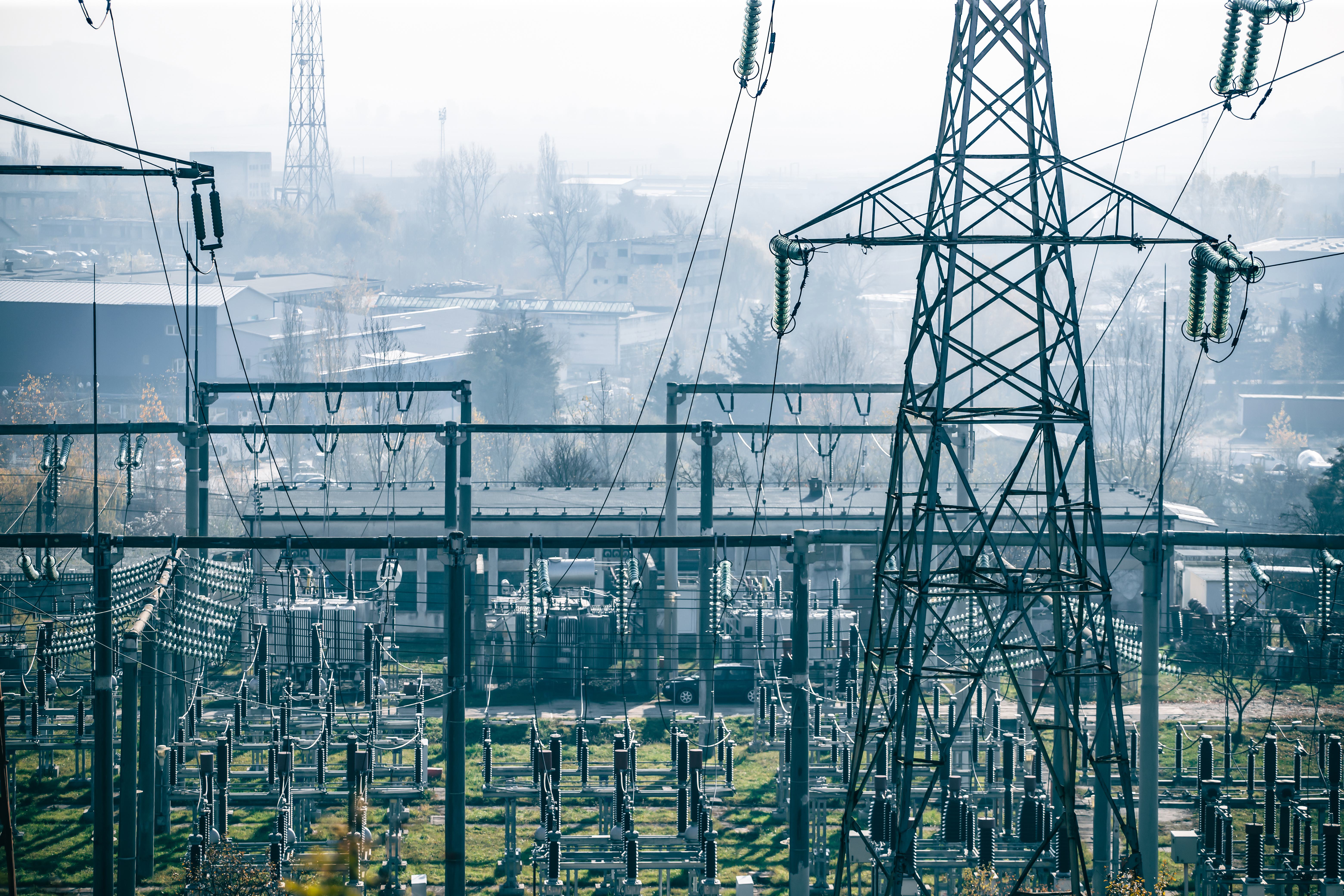
Grid modernisation should be investigated early because grid constraints are becoming one of the main barriers to renewable deployment, industrial electrification, and system growth. This is a foundational opportunity rather than a niche technology topic. A dedicated grid modernization and digital infrastructure strategy page should assess automation priorities, congestion relief models, investment logic, and where digital intelligence creates new value.

AI-driven forecasting and trading is one of the most commercially actionable digital opportunities in the sector. Market volatility, weather sensitivity, and system complexity are increasing the value of better decision-making. A deep dive on AI in energy trading and market optimisation should focus on use cases, data requirements, operating model implications, and how superior forecasting translates into measurable margin improvement.

Distributed energy platforms merit early investigation because they reflect a structural move toward decentralized participation and closer customer relationships. Companies that stay too far from this layer risk losing relevance as aggregation, behind-the-meter optimisation, and local energy services expand. A distributed energy platform strategy page should examine customer segments, service models, platform economics, and the role of partnerships in scaling participation.

Hydrogen should be approached selectively but strategically. It is still uneven in commercial maturity, yet it remains one of the most important longer-horizon opportunities for industrial decarbonisation, export-oriented energy systems, and alternative fuels. A hydrogen strategy and market positioning page should assess where demand is becoming credible, which value chain roles are attractive, and how to time investment under uncertainty.

Energy and power companies do not need more generic transition commentary. They need sharper decisions about where to play, what to build, who to partner with, and how to turn emerging opportunity spaces into commercially credible growth paths.
CamIn supports that work across the full opportunity cycle.
The objective is clear: identify where digital investment strengthens competitiveness, enables growth, and supports more confident strategic decisions.
For companies navigating this landscape, the challenge is not simply to innovate more. It is to decide which opportunity spaces matter most, which capabilities should be built internally, where ecosystem participation is essential, and how the portfolio should evolve as the market reorganizes.


