Case Study
Robotics for O&M optimisation in oil and gas
Strategic prioritisation of robotic solutions for high-impact oil and gas operations


Strategic prioritisation of robotic solutions for high-impact oil and gas operations
CamIn works with early adopters to identify new opportunities enabled by emerging technology.
of CamIn’s project team comprised of leading industry and technology experts


Our oil and gas client sought to identify and prioritise robotic solutions for high-impact operations and maintenance challenges, enabling scalable deployment and unlocking approximately $10 million in annual savings through targeted automation.
AI, digitalisation, and automation
For $130,000, we highlighted opportunities for $10 million annual savings.
3 external expert teams specialised in emerging robotic solutions for oil & gas.
CamIn completed the work in 10 weeks, 3 times faster
The client had committed to advancing robotics adoption to improve safety, efficiency and asset uptime across complex operations. They required a structured, evidence-based assessment of emerging robotic technologies across multiple maintenance and inspection domains, where internal visibility was limited.
The objective was to identify high-impact, technically feasible use cases and prioritised vendor options aligned with operational constraints. The engagement aimed to unlock around $10 million in annual savings, while enabling faster, lower-risk deployment of scalable automation solutions across critical assets.
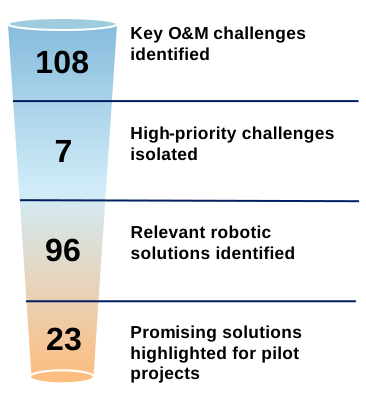
108 | CamIn identified over 100 operations and maintenance challenges across inspection, hazardous environments and manipulation tasks, establishing a comprehensive baseline aligned with asset-level operational realities. |
7 | CamIn applied impact criteria across safety, efficiency and reliability to isolate seven high-priority challenges aligned with strategic and operational objectives. |
96 | CamIn conducted a global scan of robotic technologies, identifying commercially available and emerging solutions relevant to the prioritised operational challenges. |
23 | CamIn benchmarked solutions against feasibility, adoption complexity and ROI, producing a shortlist of technologies suitable for near-term pilot deployment. |

Identified 7 priority challenges from 108, with ~$10 million annual savings potential through targeted robotic deployment.
Client is progressing investment decisions and preparing pilot implementations with defined technology partners.
Established a clear digital transformation pathway, enabling faster, safer and more cost-efficient operations.
Download our detailed case study to learn more about how CamIn and our hand-selected expert project team delivered these results for our client.

.svg)
Robotic solutions for operations and maintenance refer to the deployment of autonomous or remotely operated systems to perform inspection, data collection and physical intervention tasks across industrial assets. These include drones, crawlers, subsea robots and manipulation systems designed to operate in hazardous, confined or hard-to-access environments.
In oil and gas, these systems replace or augment manual activities such as inspection of vessels, pipelines and offshore structures, as well as maintenance tasks requiring shutdowns or specialised access. The objective is to improve data quality, reduce human exposure to risk, and enable more predictable and efficient asset management across the lifecycle.
Oil and gas operators face structural pressure to improve safety, reduce operating expenditure and extend asset life. At the same time, many facilities are ageing, more remote and increasingly regulated. Traditional inspection and maintenance approaches rely heavily on manual labour, scaffolding and shutdowns, which are costly and operationally disruptive.
Robotics address these constraints by enabling inspection without shutdowns, reducing reliance on third-party contractors and improving inspection frequency and coverage. This has direct implications for uptime, risk management and cost control. In high-throughput assets such as LNG facilities, even marginal reductions in downtime can translate into multi-million-dollar value preservation annually.
However, adoption has historically been constrained by unclear business cases, integration challenges and variability in technology maturity. The strategic importance of robotics lies not only in task automation, but in enabling a shift towards data-driven, predictive maintenance models that improve long-term asset performance.
The robotics opportunity in oil and gas is shifting from isolated pilots to portfolio-level deployment. The key opportunity is not only technology adoption, but the systematic identification of high-value use cases where robotics can materially improve cost, safety and reliability outcomes.
Inspection of process equipment remains one of the most immediate areas of value creation. Operators are increasingly targeting high-cost inspection activities such as heat exchangers, pressure vessels and rotating equipment.
Quick wins include external inspection using magnetic crawlers or drones to reduce scaffolding and access costs. These solutions can often be deployed within existing workflows and deliver measurable savings within one inspection cycle.
Mid-term opportunities focus on integrating robotic inspection data into asset integrity systems. This enables more accurate condition monitoring, supporting predictive maintenance and reducing unplanned downtime. The value here lies less in inspection cost reduction and more in avoiding production losses.
Long-term opportunities involve fully automated inspection programmes, where robotics perform continuous or scheduled monitoring without human intervention. This shifts inspection from a periodic activity to a real-time data stream, enabling new operational models and potentially reducing lifecycle costs significantly.
A less visible opportunity is the standardisation of inspection data across assets. Robotics enable consistent, high-resolution data collection, which can be leveraged to improve benchmarking and centralised decision-making across portfolios.
Robotics are particularly valuable in environments where human access is constrained by safety or regulatory requirements. These include confined spaces, high-temperature zones and areas with toxic or explosive atmospheres.
Quick wins are typically found in replacing human entry into confined spaces such as tanks and vessels. This reduces permit requirements, safety risks and associated delays. The commercial value is often driven by reduced downtime and improved compliance.
Mid-term opportunities involve expanding robotic deployment into routine operations in hazardous zones. This includes inspections in live process environments, where shutdowns are not feasible. Adoption here depends on certification standards and integration with existing safety systems.
Long-term opportunities include the development of fully autonomous systems capable of operating continuously in hazardous environments. This could fundamentally change how operators manage high-risk assets, reducing both operational risk and insurance-related costs.
A critical but underappreciated factor is regulatory alignment. Operators that proactively integrate certified robotic solutions may gain faster approval cycles and improved compliance positioning, particularly in highly regulated jurisdictions.
Beyond inspection, robotics are increasingly being explored for physical intervention tasks such as valve operation, cleaning and minor repairs.
Quick wins are limited but emerging in semi-automated systems that assist human operators, particularly in repetitive or ergonomically challenging tasks. These systems can improve productivity without requiring full process redesign.
Mid-term opportunities lie in automating specific maintenance tasks that currently require shutdowns or extensive preparation. For example, robotic systems capable of performing targeted repairs or cleaning in situ can significantly reduce outage duration.
Long-term opportunities involve fully autonomous maintenance systems that can execute complex interventions without human involvement. While still in development, these systems could reduce dependency on skilled labour and enable more flexible maintenance strategies.
A key insight is that the value of manipulation robotics is often underestimated because it requires integration into existing workflows. However, where successfully implemented, it can unlock both cost savings and new operational capabilities.
The most strategic opportunity lies in combining robotics with digital technologies such as AI, advanced analytics and remote operations.
Quick wins include using robotics to collect higher-quality data, which can immediately improve inspection accuracy and reporting. This supports better short-term decision-making without significant system changes.
Mid-term opportunities involve integrating robotic data streams into centralised platforms, enabling predictive maintenance and cross-asset insights. This requires investment in data infrastructure but can significantly improve asset reliability and planning.
Long-term opportunities include fully integrated digital operations where robotics, sensors and analytics work together to optimise performance in real time. This enables a shift from reactive to proactive asset management, with implications for cost structure and operational resilience.
An important strategic consideration is data ownership and interoperability. Operators that establish strong data governance frameworks early will be better positioned to scale these capabilities across assets and geographies.
The robotics landscape in oil and gas is broad and evolving. Technologies differ significantly in maturity, applicability and commercial viability. Understanding their relative strengths and limitations is critical for effective prioritisation.
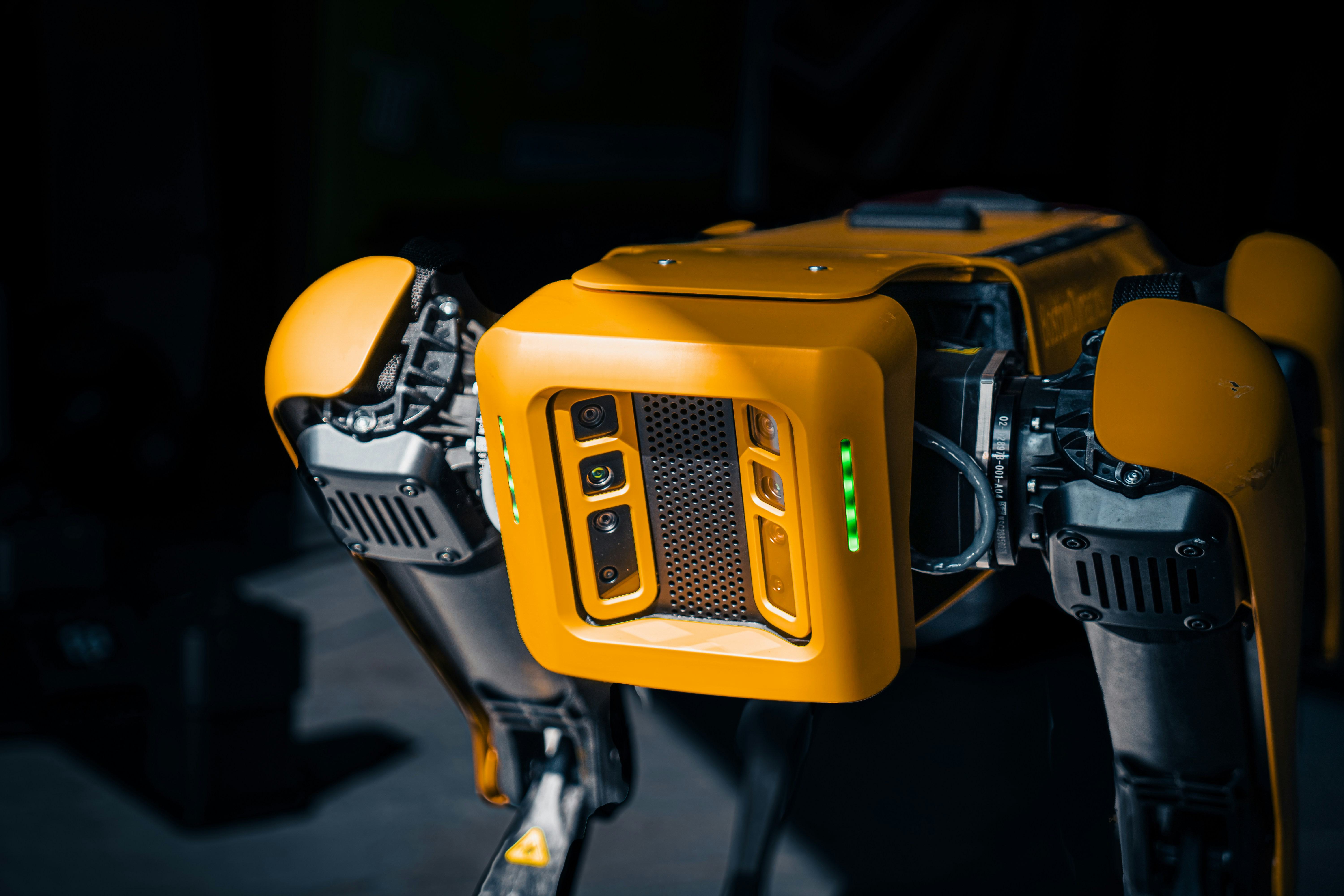
Drones are widely used for inspection of large structures such as flare stacks, tanks and offshore platforms. Their primary strength lies in rapid deployment and ability to access hard-to-reach areas without scaffolding.
The main opportunity is reducing inspection time and cost, particularly for visual inspections. However, limitations include restricted use in hazardous environments due to certification requirements and limited payload capacity for advanced sensors.
Threats include regulatory constraints and competition from alternative inspection methods such as fixed sensors. The strategic opportunity lies in integrating drones into routine inspection programmes rather than using them as ad hoc tools.
Magnetic crawlers are among the most commercially mature technologies, particularly for inspection of ferrous surfaces such as vessels and pipelines.
Their strength is in delivering high-resolution, repeatable inspection data while reducing the need for manual access. They are well suited to applications where downtime reduction is critical.
Weaknesses include limited applicability to non-ferrous materials and challenges in complex geometries. However, their strong ROI profile makes them a priority for many operators.
Opportunities include expanding their use into automated inspection programmes and integrating with data analytics platforms. The main threat is commoditisation, which may reduce differentiation among solution providers.
These include wheeled, tracked and snake-like robots designed to navigate complex internal geometries.
Their key strength is access to areas that are unsafe or impossible for human entry. This enables inspection of critical infrastructure without shutdowns or disassembly.
Limitations include deployment complexity, high setup time and sometimes limited data quality compared to external inspection methods. Adoption is often constrained by operational disruption during deployment.
Opportunities lie in improving ease of deployment and integrating these systems into routine maintenance workflows. The main threat is that high operational complexity may limit scalability unless simplified solutions are developed.
Manipulation systems are designed to perform physical tasks such as valve turning, cleaning or minor repairs.
Their strength is in enabling automation beyond inspection, directly impacting maintenance costs and downtime. However, these systems are less mature and often require significant integration with existing processes.
Weaknesses include high capital cost, complexity and limited standardisation across assets. This makes business case development more challenging.
Opportunities exist in high-value, repetitive tasks where automation can deliver consistent savings. The main threat is slow adoption due to integration challenges and uncertain ROI.
Hybrid systems combine robotics with AI, remote control and advanced sensing to enable more autonomous operation.
Their strength is in enabling scalable, data-driven operations, particularly when integrated with digital platforms. They can support predictive maintenance and real-time decision-making.
However, these systems require significant investment in data infrastructure and organisational capabilities. Interoperability and cybersecurity are key challenges.
Opportunities lie in creating fully integrated operational ecosystems that combine robotics, sensors and analytics. The threat is that without clear data strategies, investments may not deliver expected returns.
A critical insight is that the value of these systems is not in the hardware alone, but in how effectively they are integrated into broader operational and decision-making frameworks.


